Cappadocia/Göreme
Since 2011, Biking Turkey have been based in Goreme, Cappadocia: Turkey's legendary UNESCO Heritage national park of natural MTB flow-trails, fairytale scenery and beguiling history...
Our best biking tours in Cappadocia, Turkey...
Cappadocia Adventure Gravel Bikepacking
Explore activity
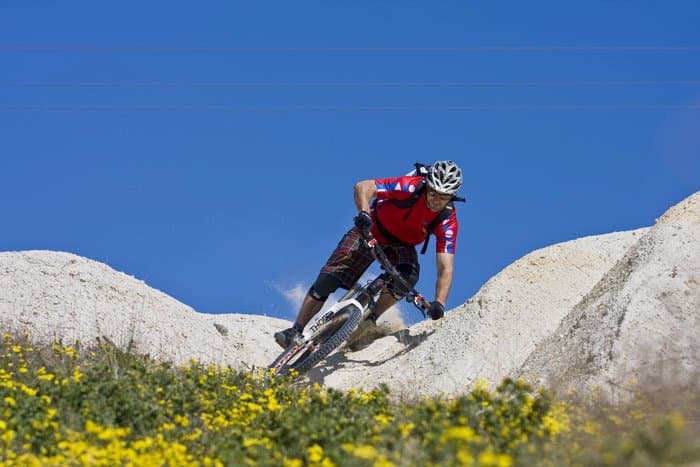
Cappadocia Singletrack and Enduro MTB
Explore activity
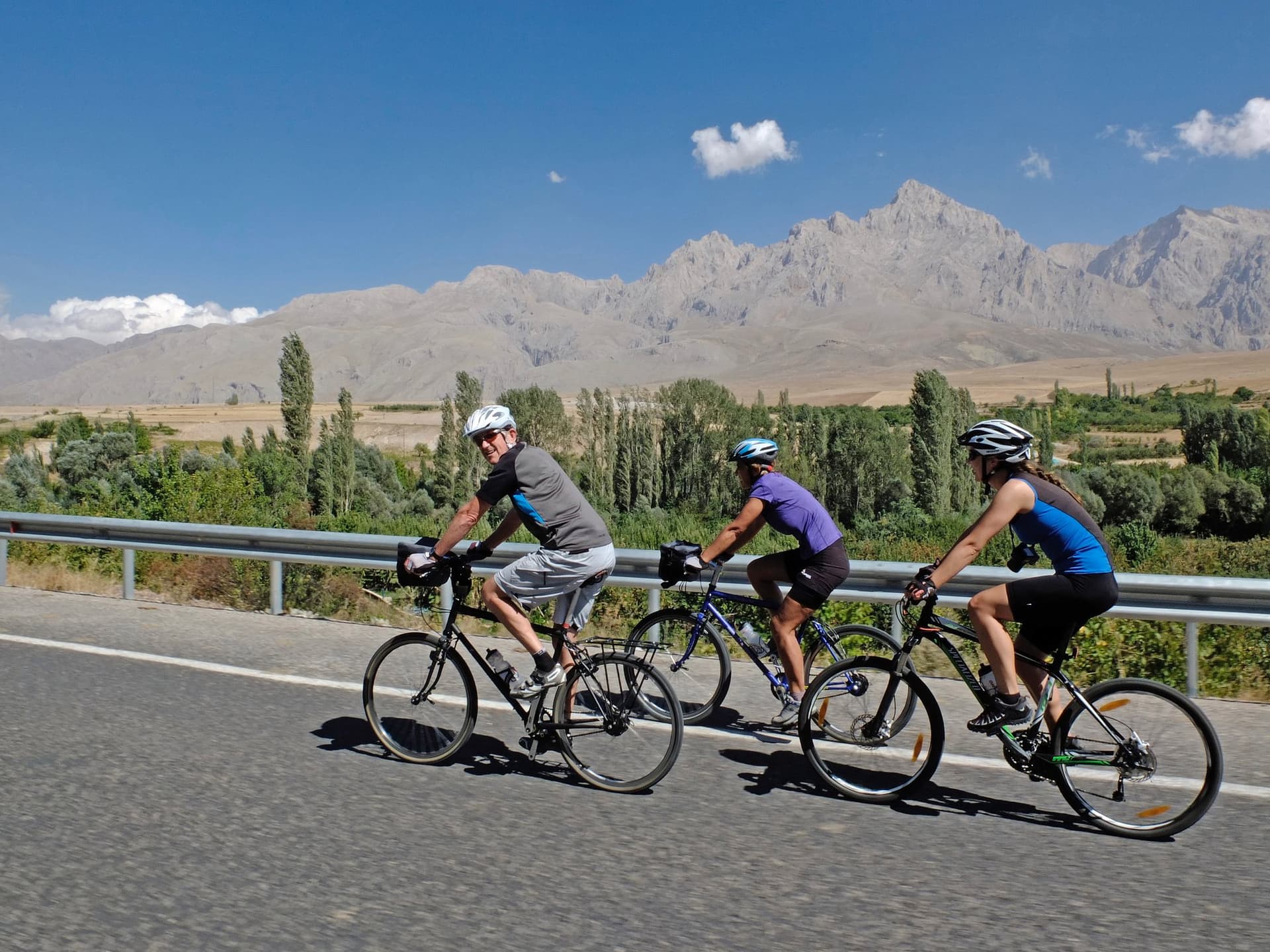
Cappadocia Road Bike Touring
Explore activity
---
Since 2011, Biking Turkey have been based in Goreme, Cappadocia: Turkey's legendary UNESCO Heritage national park of natural MTB flow-trails, fairytale scenery and beguiling history...
Our best biking tours in Cappadocia, Turkey...
Cappadocia Adventure Gravel Bikepacking
Explore activity
Cappadocia Singletrack and Enduro MTB
Explore activity
Cappadocia Road Bike Touring
Explore activity
---
Local Conduct
Bear in mind that Cappadocia is a conservative part of Turkey and villagers may be somewhat offended by skimpy outfits, bare shoulders, and revealing clothing. Although close-fitting lycra is fully accepted as cycling wear, it still pays to dress sensibly to avoid attracting unwanted attention.
Weather
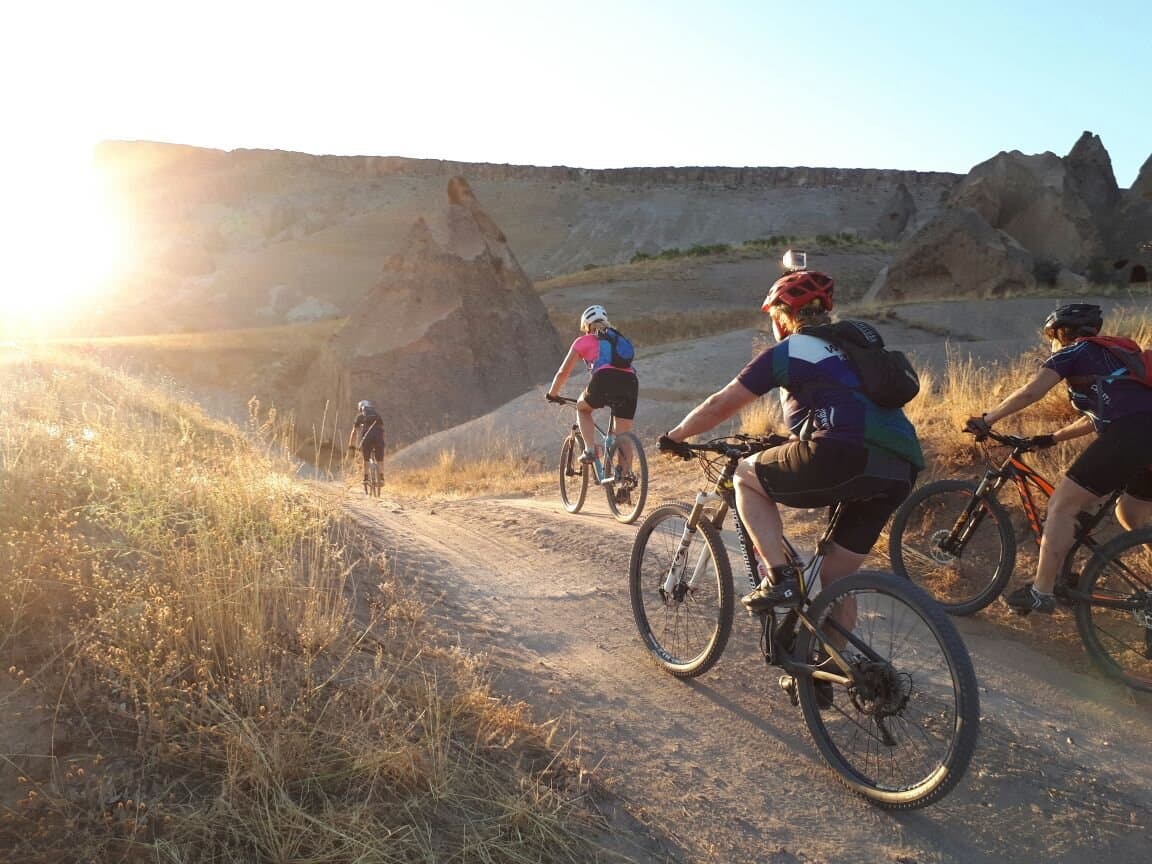
Cappadocia has a continental climate- often with a significant temperature difference between day and night. The region has perfect riding conditions from May to October though the high summer of July and August may be too hot for some. Enclosed on both along the northern and southern coasts by mountain ranges, the area receives relatively little rain throughout the year but in spring and autumn rain and colder weather is always possible. Spring is the time where the region gets most of its rainfall but this normally comes in short intervals, and don't last long. Summer is between June and August and is generally very hot, with daytime temperatures can rise up to 40 degrees Celsius. Autumn starts in September and ends in November, and (like spring) is the high season for biking and hiking. Winter lasts from December to February, with an average temperature of minus 2 degrees Celsius. Cappadocia in the snow is a wonderful experience!
_Seasonal rainfall and temperature overview_
Optional Activities
Cappadocia is a touristic paradise and there are many recommended excursions and activities to choose from…
A Brief History of Cappadocia
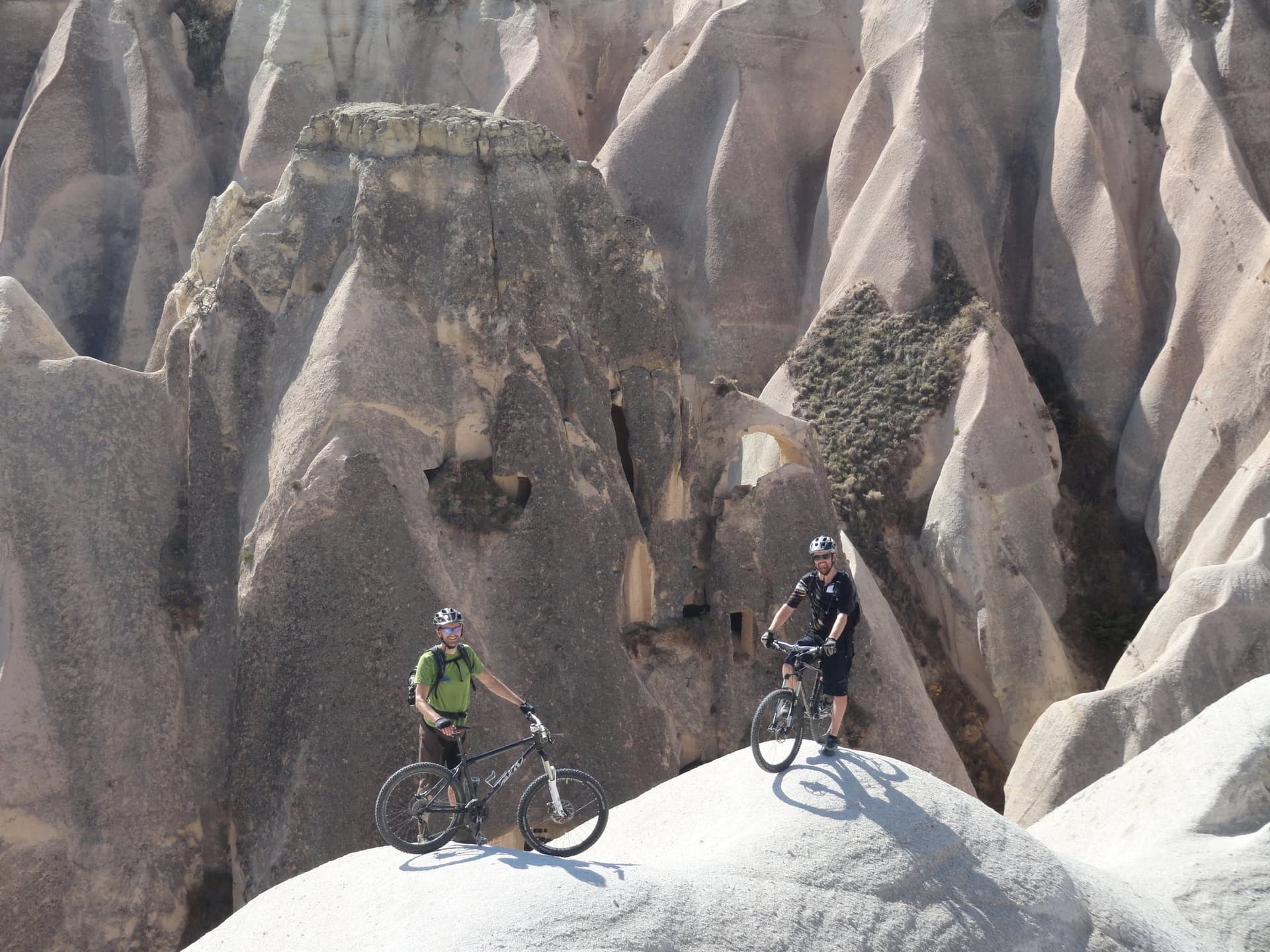
Cappadocia is built on the remains of volcanic eruptions from more than 60 million years ago, shaped by the wind and rain, forming one of nature's most spectacular masterpieces. Strange rock formations look something like cake icing (or interlocking fingers) and towering rock stacks known as "fairy chimneys" reach up to the sky. Settled throughout time by Hittite, Persian, Romans, Byzantine and Ottoman civilisations, many of these caves are still decorated with icons and wall paintings from the early Christian times.
The Cappadocian region has been inhabited since prehistoric times. During the Early Bronze Age, it came under the influence of Assyrian civilisation through extensive trade, and it was during this period that writing was introduced. The origin of the name "Cappadocia" (pronounced Kapadokia in Turkish) remains uncertain. Many sources suggest that it derives from the Old Persian "Katpatuka", meaning "Land of Beautiful Horses", referring to the region's long tradition of horse breeding. The earliest known record of the name appears in inscriptions of the Persian Achaemenid kings in the early sixth century BC, when Anatolia was part of their empire.
Central Anatolia was once largely covered by great lakes, which eventually dried up; present-day Tuz Gölü (Salt Lake) is a remnant of this ancient landscape. Human settlement in Cappadocia dates back to Neolithic "New Stone Age" and Chalcolithic "Copper Age" cultures, spanning roughly 9,000–5,000 years ago. Obsidian tools and Mother Goddess figurines survive from these ancient societies. The Hittite kingdom ruled the region from around 1800 to 1200 BC, after which the Persians took control of Anatolia around 550 BC. Cappadocia later became a refuge for early Christians. Particularly during the Byzantine Empire, from the 4th -11th centuries, Christianity flourished throughout the region, leaving behind the remarkable rock-hewn churches and monasteries that can still be seen today.
Because of its location, Cappadocia was an extremely important and strategic region. Major trade routes (including the famous Silk Road) crossed it from east to west and north to south. This constant movement of people and goods created a complex mixture of cultural and historical influences. Cappadocia's resources and strategic position made it a tempting prize, and the region was frequently invaded, raided and looted. To protect themselves from these threats, local inhabitants increasingly made use of the region's caves and caverns, whose concealed entrances could be easily defended. As people sometimes needed to remain underground for extended periods, these troglodytic dwellings developed into vast subterranean complexes containing wells, food stores, wineries, places of worship and living quarters. Some may predate the Christian era.
Over the centuries, numerous civilisations and ethnic groups shaped Cappadocia's cultural history. Under Seljuk and Ottoman rule, Christians were generally treated with tolerance, and Greek- and Turkish-speaking Anatolians lived alongside one another for centuries. This changed dramatically after the First World War and the establishment of the Turkish Republic in 1923. The population exchange between Greece and Turkey resulted in the resettlement of Greek-speaking Orthodox Christians from Anatolia to Greece, while Mustafa Kemal Atatürk introduced sweeping reforms that transformed the newly established Turkish Republic. Cappadocia subsequently lost much of its importance within Anatolia, and its rich history was largely forgotten. It was not until the early 20th century that the region's extraordinary rock-hewn churches attracted renewed attention, following their rediscovery by the French priest Guillaume de Jerphanion in 1907.
A Concise Geology of the Region
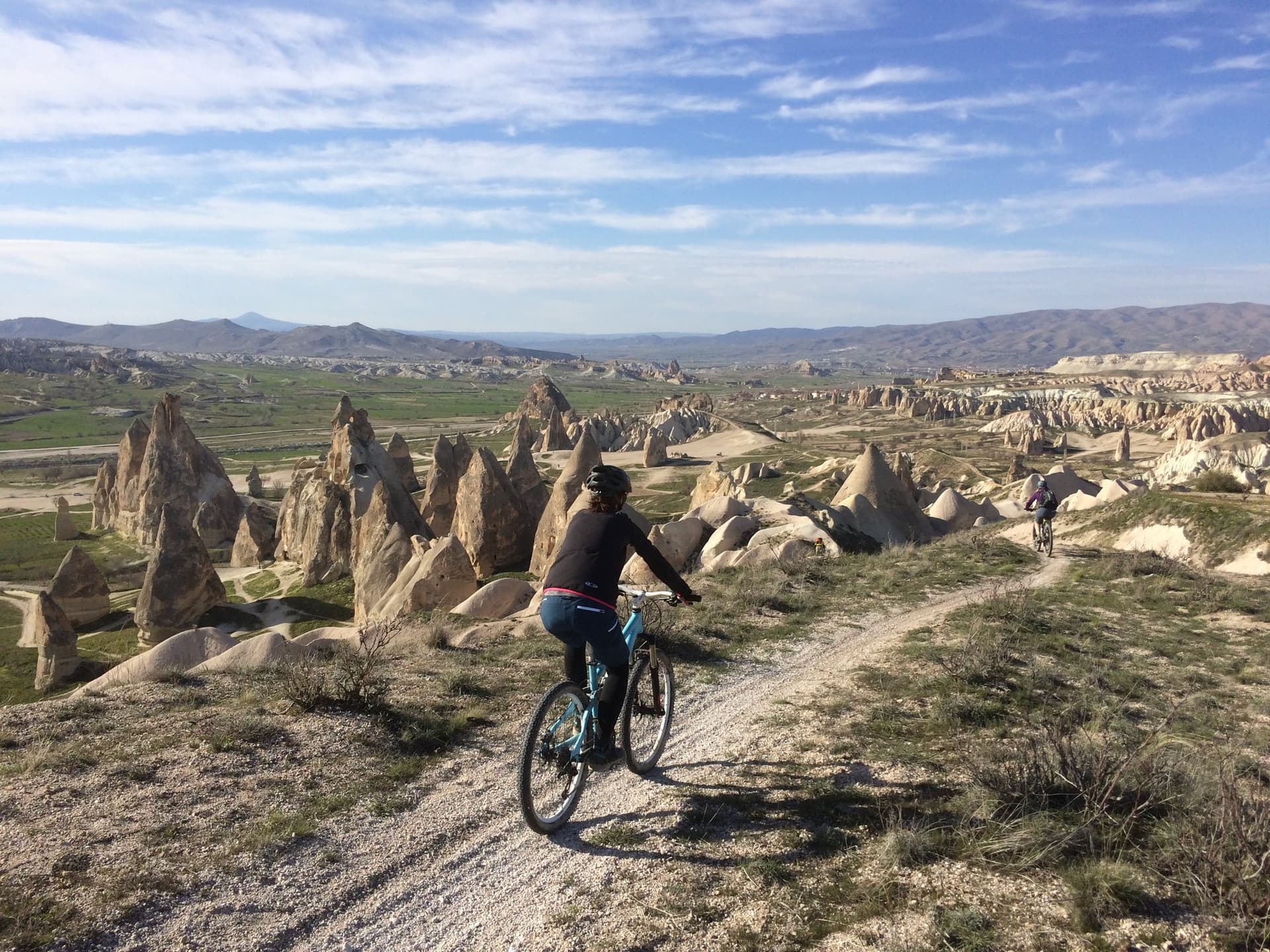
Cappadocia possesses a unique and almost surreal landscape, created by millions of years of volcanic activity and erosion. A massive ancient volcano, now largely eroded away, together with volcanoes such as Erciyes, Hasan and Melendiz, formed a chain of volcanic peaks running roughly parallel to the Taurus Mountains. Volcanic eruptions deposited vast quantities of ash, lava and other material across the region, gradually forming a broad plateau. The volcanic ash eventually consolidated into soft rock known as tuff, while harder layers of basalt and andesite formed above it. Over millions of years, wind, rain, snow, rivers and temperature changes progressively sculpted this landscape into the remarkable formations seen today.
Cappadocia's climate, with its significant temperature fluctuations, heavy rainfall and spring snowmelt, continues to play an important role in erosion. Mechanical weathering also contributes to the process: rocks expand when heated and contract as they cool, while water freezing in cracks can gradually break them apart. Rain and rivers, however, have been the most important agents of erosion. Heavy rainfall carved the relatively smooth volcanic plateau into a complex network of gullies, often following existing cracks and weaknesses in the rock. Streams and rivers then carried away the eroded material, sometimes cutting deep vertical channels into the volcanic deposits and leaving isolated pinnacles between the gullies.
The softer ash layers eroded much faster than the harder basalt and andesite above them, creating the distinctive capped formations known as "fairy chimneys." These formations developed where harder rock protected the softer tuff beneath it. As erosion continued, the surrounding material disappeared, leaving isolated columns, cones and mushroom-like shapes topped by protective caps of harder rock. Some fairy chimneys reach heights of around 40 metres. They survive only as long as their protective cap remains intact. Once the cap falls, the softer rock beneath rapidly erodes, and the remaining pinnacle is eventually reduced to the surrounding landscape.
The volcanic tuff was also remarkably easy to carve with primitive tools. Over thousands of years, countless homes, monasteries and churches were excavated into the rock formations and valley walls. Underground cities were likewise constructed and expanded over successive generations, creating extraordinarily complex networks of living quarters, storage rooms, wells, wineries, places of worship and passages. These underground refuges played an important role at various times in Cappadocia's history, particularly for early Christian communities seeking protection during periods of persecution and conflict. Today, they remain among the region's most fascinating archaeological features—a vast subterranean world of hidden passages, chambers and ancient places of worship, where each successive civilisation built upon the work of those who came before.
Zelve Open-Air Museum
The Zelve museum is great- you can just follow along the path and read the posted signs (or listen to your tour guide) as you look at absolutely amazing networks of cave houses in the surrounding landscape.
Walking Tours
Our sister company Middle Earth Travel are the local experts on walking, trekking and mountaineering tours. Climb Mt. Hasan, go rock climbing in the Crimson Mountains take a guided walk through some of the valleys inaccessible by bike, or even try your hand at abseiling- this is the place to come.
Avanos Pottery Workshop
Avanos is a centre of high-quality ceramics decoration and a visit to an atelier makes a wonderful excursion, even if you are only window-shopping. We can hook you up with the best designers, and organise a trip to their workshop so you can see how the art is made. You can even create your own pottery works here.
Whirling Dervish Show
A popular evening's entertainment at the Sarihan Caravansaray that makes a wonderful and memorable night out from Göreme. Collected and delivered back to your hotel, wonderful live music and Sufi dancing fills the senses.
Turkish Bath
The tradition of the communal bath ("hamam" in Turkish) was born generations ago, adopted from Romans and Byzantines and then perfected by the Seljuk and Ottoman Turks. Göreme's hamam isn't the cheapest but it's one of the best. To help you relax after your daily biking adventures in Cappadocia, professional masseurs offer a variety of services in addition to the bathing ritual.
Göreme Open-Air Museum
The Göreme Open-Air Museum resembles a vast monastic complex composed of scores of refectory monasteries placed side-by-side, each with its own fantastic church. It is the first sight to be visited by any traveller in Cappadocia, and as such is often overcrowded. However, the churches here have the most impressive and best restored frescoes- worth the entrance fee.
Cycling in Cappadocia/Göreme
Göreme Daily Cycling Tour
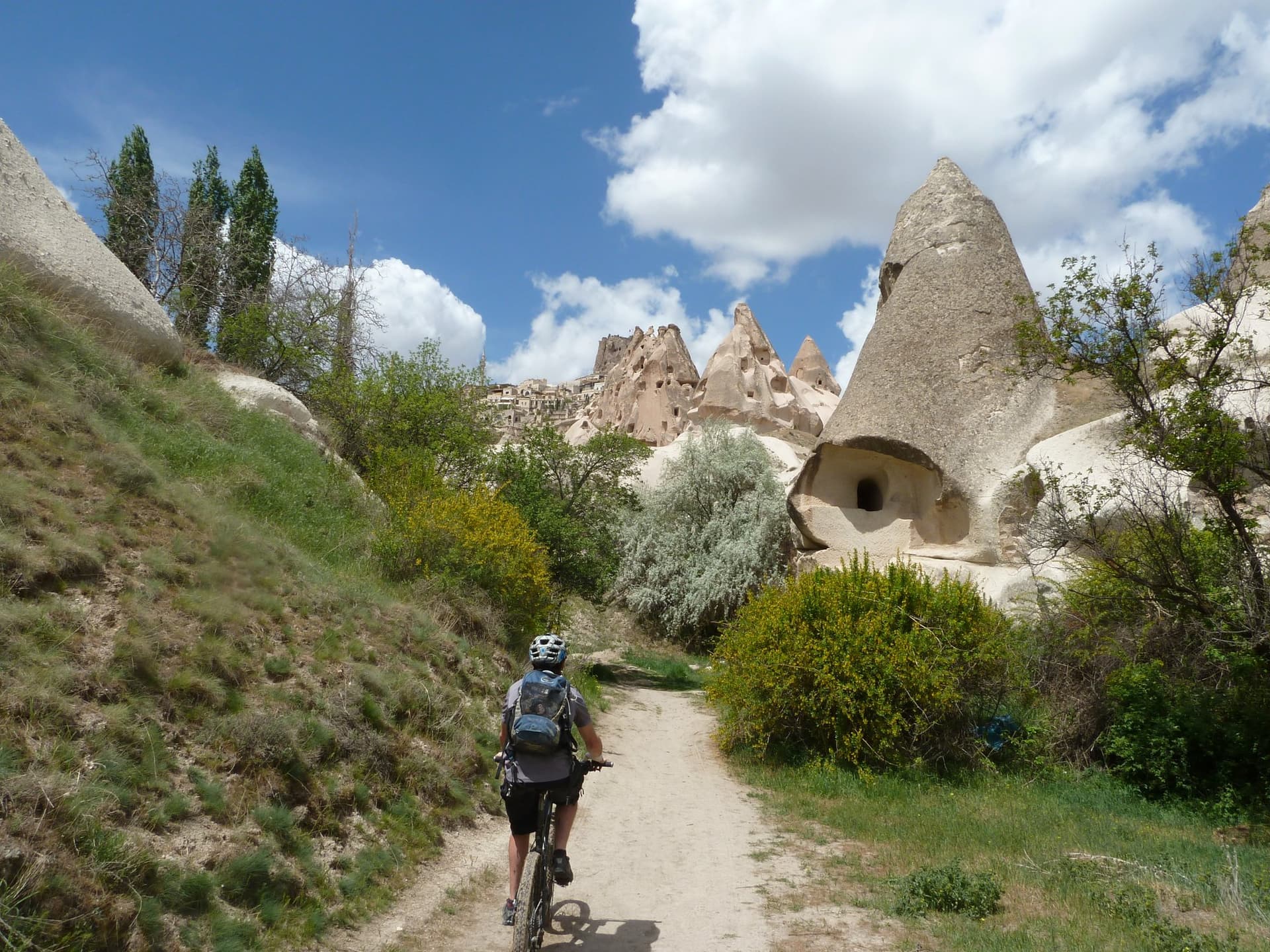
Goreme Valley Explorer
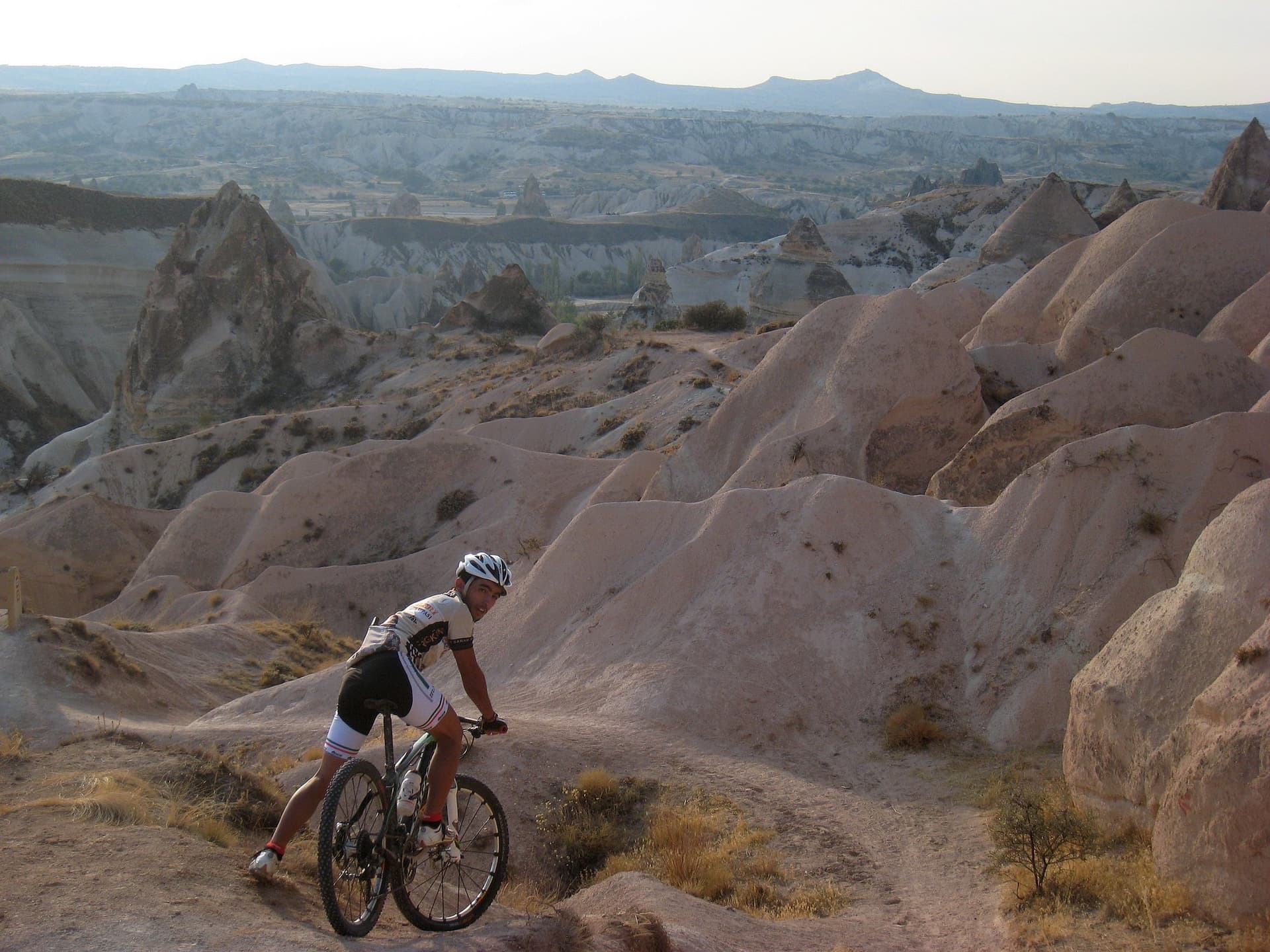
Goreme Panoramic
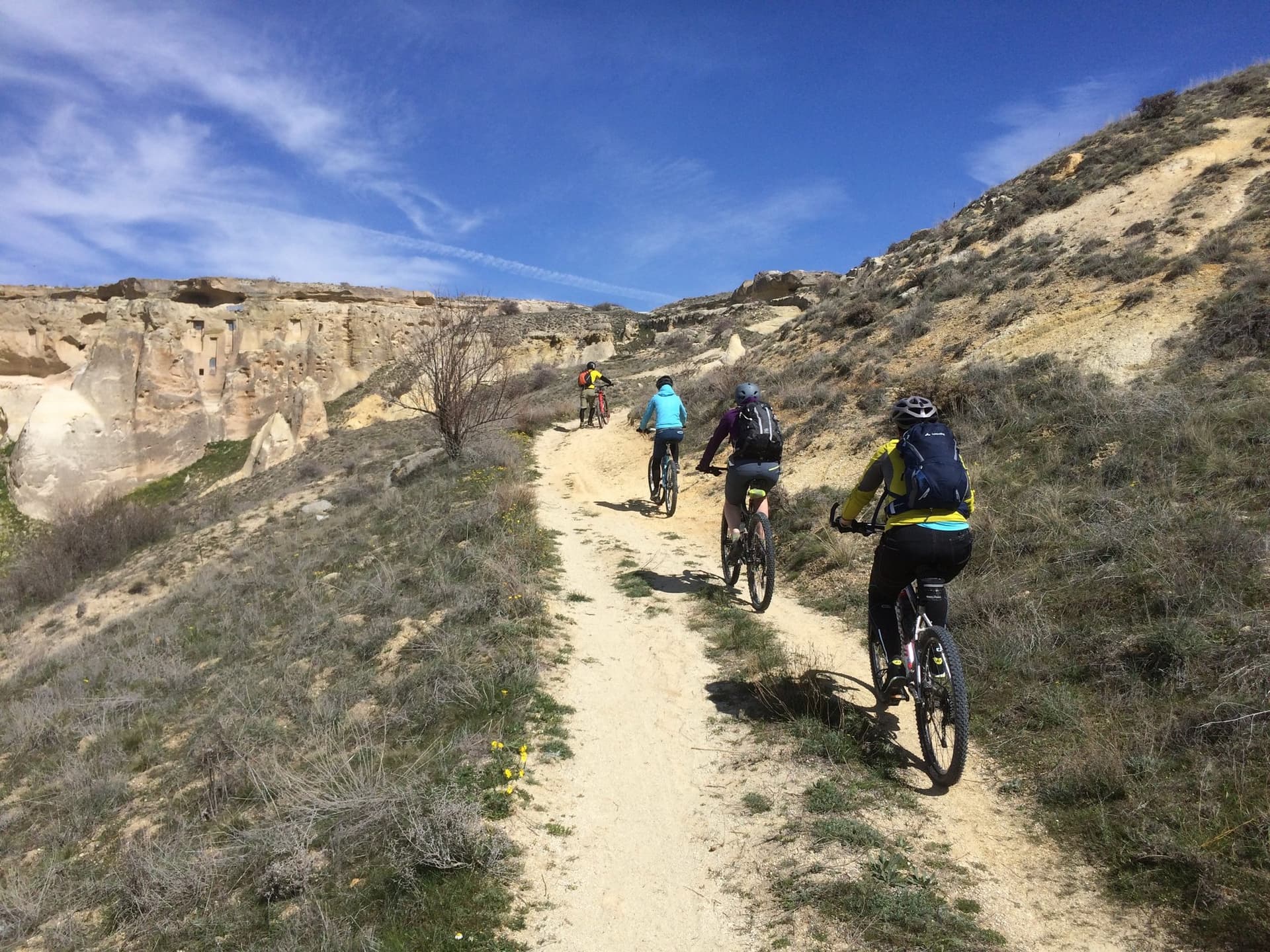
Goreme Pathways
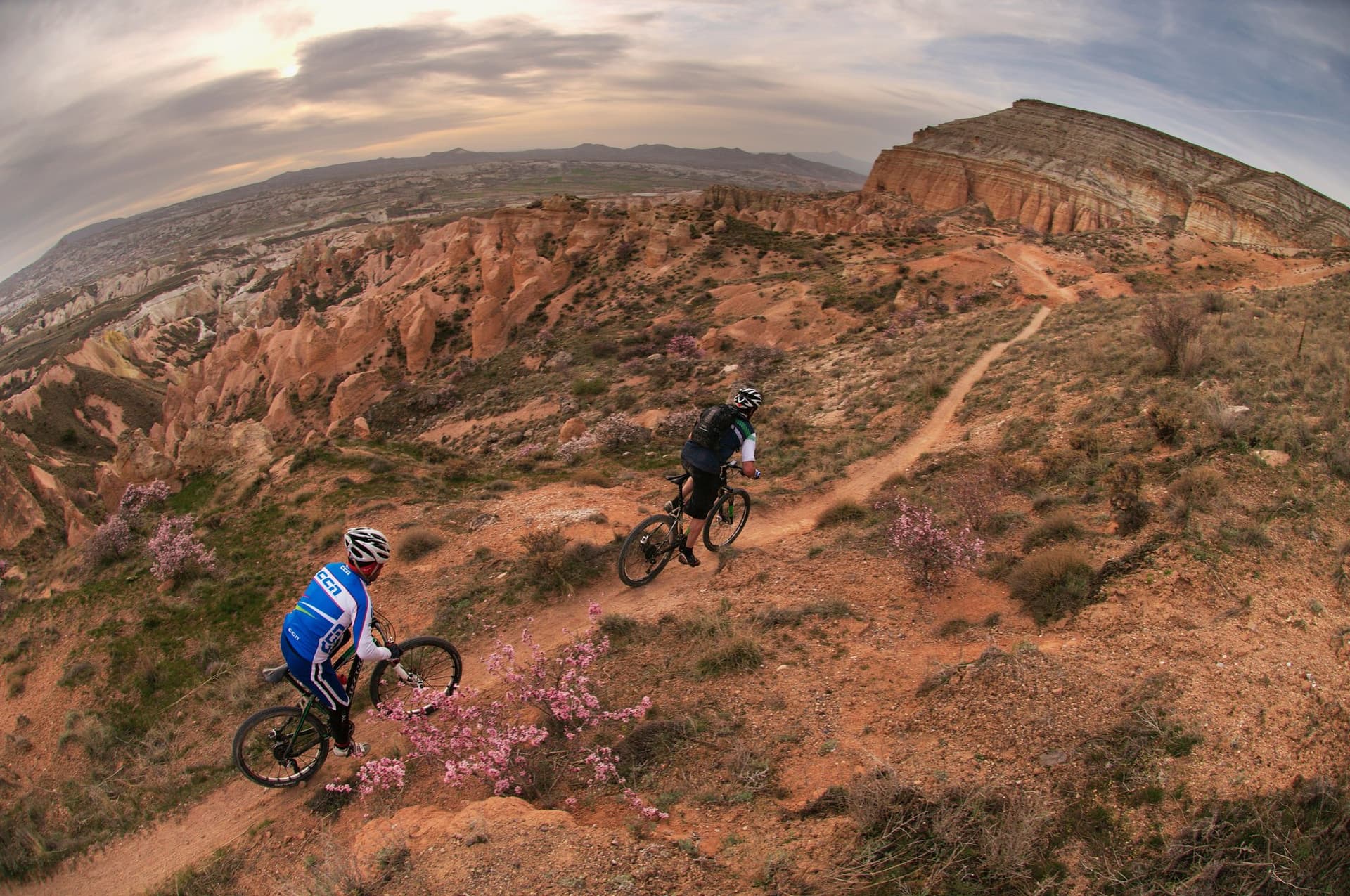
Cappadocia Weekend Warrior
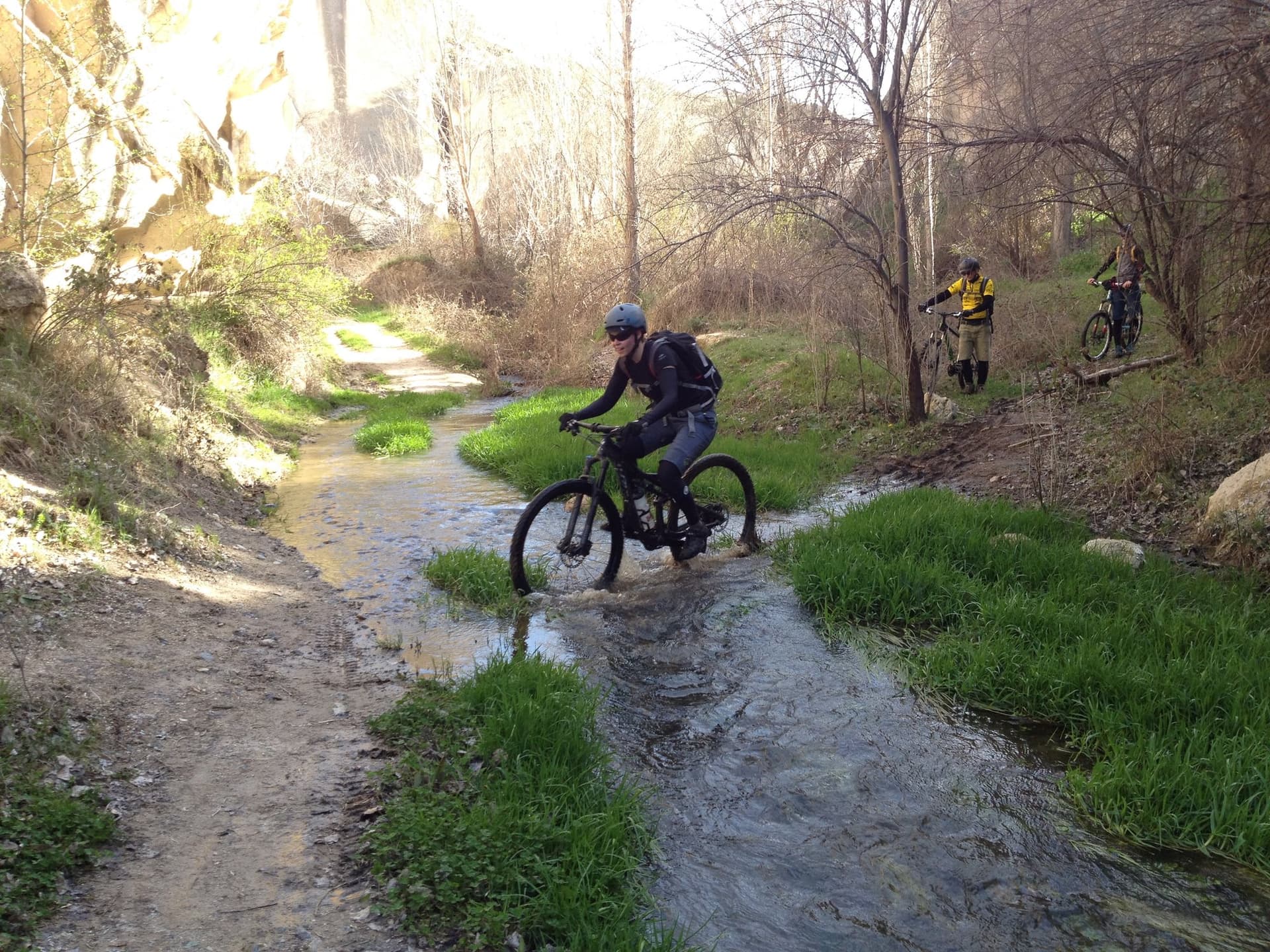
From the Jungle to the Moon and Back
Cappadocia Multi-Day Cycling Tours
Cappadocia Road Biking